Source barrier pe toothpaste sachet for dental, hotel, and food packaging
Find 30 barrier pe toothpaste sachet options for dental preventive care, hotel amenities, and food or pharmaceutical packaging. Buyers can compare specifications like material, size, and customization features from verified Chinese suppliers.
Key considerations
Products List


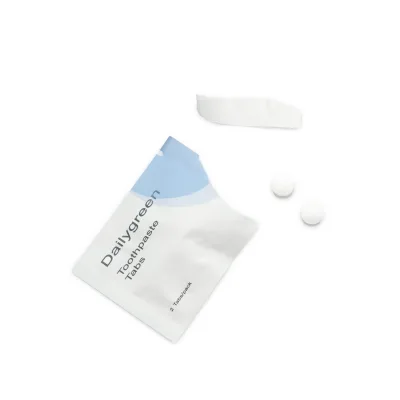


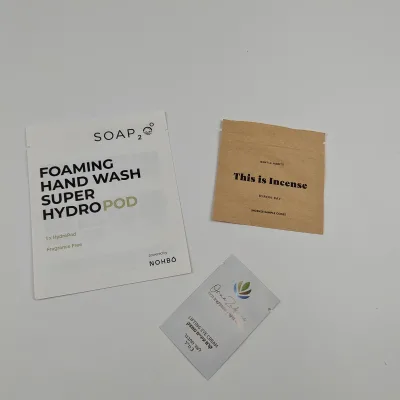


Comprehensive Sourcing Guide
Strategic Sourcing Guide for Barrier PE Toothpaste Sachets
The global demand for single-use oral care solutions has driven significant innovation in barrier packaging technologies. For procurement professionals targeting barrier PE toothpaste sachets, the focus must shift from simple container selection to a comprehensive evaluation of material integrity, regulatory compliance, and supply chain reliability. This guide synthesizes observed market data and technical specifications to provide a disciplined framework for sourcing these critical packaging components. The objective is to ensure that the selected sachets provide the necessary protection for sensitive dental formulations while meeting the rigorous demands of industrial and commercial applications.
Technical Specifications and Material Architecture
The core functionality of a barrier PE toothpaste sachet relies on a multi-layered structure designed to prevent moisture ingress and oxygen penetration. Based on observed product attributes, the ideal sachet for this application utilizes a "Functional Layer" architecture where Aluminum (AL) is integrated to provide an absolute barrier. The primary substrate is typically Polyethylene (PE), specifically Low-Density Polyethylene (LDPE), which offers the necessary flexibility and heat sealability. The hardness of the final product is observed as "Rigid" in its packaged state, ensuring structural integrity during transport, yet the material itself must remain pliable enough to be sealed effectively.
Transparency is a critical variable in the selection process. While some packaging requires visibility, the data indicates that high-barrier sachets often present as "Opaque." This opacity is not merely aesthetic; it protects light-sensitive ingredients, such as certain whitening agents or probiotics, from degradation. The heat seal mechanism is predominantly achieved through the LDPE layer, which must fuse at specific temperatures to create a hermetic seal. Buyers must verify that the "Flat Bag Packaging" method aligns with their filling machinery, as the sealing width and temperature profile are machine-specific.
| Feature | Observed Attribute | Procurement Implication |
|---|---|---|
| Primary Material | PE (Polyethylene) | Ensures chemical resistance and flexibility. |
| Barrier Layer | AL (Aluminum) | Provides critical moisture and oxygen barrier. |
| Sealing Method | LDPE Heat Seal | Requires precise temperature control during filling. |
| Transparency | Opaque | Essential for light-sensitive dental formulations. |
| Hardness | Rigid | Maintains shape during logistics and storage. |
| Customization | Available | Allows for branding and specific dimension adjustments. |
Compliance and Certification Verification
In the dental and pharmaceutical sectors, compliance is non-negotiable. Procurement teams must rigorously verify that suppliers possess valid certifications that align with international standards. The observed market data highlights "SGS" and "ISO22716" as key certifications. ISO22716 specifically relates to Good Manufacturing Practices (GMP) for cosmetic products, which is often the benchmark for oral care packaging intended for direct contact with sensitive tissues.
When evaluating potential suppliers, buyers should not assume that all listed products meet these standards. Instead, the procurement process must include a request for current, valid certificates. The "standard" attribute observed in the data suggests that while a baseline exists, specific project requirements may demand higher grades. For instance, if the sachet is intended for "Dental Preventive Health Care Materials," the material must be non-toxic and free from harmful leachates. The "Chemical" nature of the ingredients mentioned in the context implies that the packaging material must be inert and not react with the toothpaste formulation.
Furthermore, the "Industrial Use" classification often encompasses both "Food" and "Pharmaceutical" sectors. This dual classification requires that the sachet material meets the stringent requirements of both industries. Buyers should verify that the supplier's quality management system covers the specific regulatory frameworks of the destination market, whether it be the FDA in the United States or the EU regulations for medical devices and cosmetics.
Cost Drivers and Economic Parameters
Understanding the cost structure of barrier PE sachets is essential for budgeting and negotiation. The observed price range in the market spans from $0.01 to $7.80 USD, a variance that reflects differences in material thickness, barrier layer quality, and order volume. The primary cost driver is the inclusion of the Aluminum (AL) layer. Sachets with a functional aluminum barrier are significantly more expensive than standard PE pouches due to the cost of the metal and the complexity of the co-extrusion or lamination process.
Minimum Order Quantity (MOQ) is another critical economic factor. The data shows an MOQ range from 1 to 300,000 units. For small-scale startups or trial runs, suppliers offering low MOQs are vital, though the unit cost will be higher. Conversely, large-scale industrial buyers can leverage economies of scale by ordering in the hundreds of thousands, potentially driving the unit cost toward the lower end of the observed range. However, buyers must be cautious of suppliers claiming extremely low MOQs without verifying their production capacity, as this can lead to quality inconsistencies.
Lead time is also a significant cost driver in the supply chain. An observed lead time of 25 days is standard for custom orders involving barrier layers. Delays in production can disrupt inventory levels, leading to stockouts and lost sales. Buyers should factor in this 25-day window when planning production schedules and should negotiate penalties for late delivery in their contracts. Additionally, the "Pallet" and "Box" packing methods affect shipping costs. A "Single gross weight" of 18.000 kg for a large package versus 0.005 kg for a single item highlights the importance of optimizing packaging density to reduce freight expenses.
Typical Applications and Usage Scenarios
The versatility of barrier PE toothpaste sachets allows them to serve diverse markets. The observed "Usage" attributes indicate applications in "Dental Preventive Health Care Materials," "Hotel" services, and "Commercial" sectors. In the dental department, these sachets are often used for single-dose applications to ensure hygiene and prevent cross-contamination. The "Disposable" nature of the product aligns with modern infection control protocols.
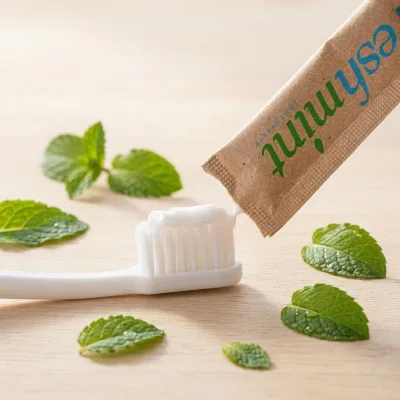
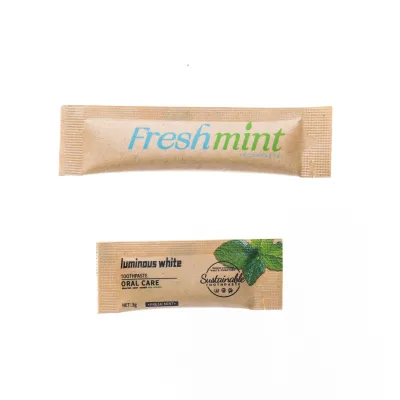
For the hospitality industry, specifically hotels, the sachet serves as a complimentary amenity. The "Type" is identified as "Hotel toothpaste," often featuring customizable flavors like "Mint," "Sea Salt," "Icecream," "Orange," "Peach," "Strawberry," and "Lemon." The volume for these sachets is typically small, such as 3g, to fit within the compact dimensions of hotel toiletry kits. The "Main ingredients" listed as "sillica" (silica) and "Chemical" components suggest that the sachet must be compatible with abrasive cleaning agents used in toothpaste formulations.
In commercial applications, the sachet may be used for promotional giveaways or sample distributions. The "Feature" set includes "Whitening," "Anti-Cavity," "For Sensitive Teeth," "Oral Refreshing," "Basic Cleaning," and "Anti-Bacterial." The packaging must protect these active ingredients from degradation. The "Age Group" is generally "Adult," but the design can be adapted for pediatric use if the barrier properties remain intact. The "Shared Instrument Equipment" nature implies that the sachet is part of a broader ecosystem of dental care tools, requiring compatibility with existing dispensing or packaging machinery.
Supplier Evaluation and Selection Criteria
Selecting the right supplier requires a multi-faceted approach that goes beyond price comparison. Buyers should prioritize suppliers who demonstrate a clear understanding of the "Functional Layer" technology. A supplier who can explain the lamination process and the specific properties of the AL and LDPE layers is more likely to deliver consistent quality. The "prod_origin" data indicates that many suppliers are based in China, with specific hubs in "Wuxi" and "Jiangsu." While this provides a pool of potential partners, buyers must verify the specific factory capabilities rather than relying solely on the region.
The "Brand" and "Product name" attributes, such as "luminous white" or "Environmentally friendly toothpaste," suggest that some suppliers offer branding services. However, buyers must ensure that the customization does not compromise the barrier integrity. The "Customization" attribute is available, but it must be validated against the "prod_standard" of "10cm X 15cm (4" X 6")" or other specific dimensions like "5x5cm" or "9X2.5X0.1 cm."
When evaluating suppliers, request samples that match the exact specifications of the intended application. Test the heat seal strength, the barrier properties against moisture, and the compatibility with the specific toothpaste formula. The "Weight" being "customizable" is a significant advantage, but it requires precise calibration to ensure the sachet holds the correct volume without leakage. A supplier with a robust quality control system, evidenced by "SGS" and "ISO22716" certifications, is essential for maintaining brand reputation.
Quality Control and Long-Term Procurement Strategy
Quality control (QC) must be integrated into every stage of the procurement process. Given the "Rigid" nature of the product and the "Flat Bag Packaging" method, visual inspection for seal integrity is the first line of defense. Buyers should implement a protocol for checking the "Heat Seal" quality, ensuring there are no pinholes or weak spots that could lead to leakage. The "Single package size" of "55X27X25 cm" for bulk packaging and "9X2.5X0.1 cm" for individual units requires careful handling to prevent damage during transit.
Long-term procurement considerations involve building a resilient supply chain. The "Lead Time" of 25 days is a baseline; buyers should establish relationships with suppliers who can offer expedited options during peak seasons. The "MOQ" of 4000 Pcs for specific models like "QD-904" or "TP-8012" suggests that buyers need to forecast demand accurately to avoid overstocking or understocking. Diversifying the supplier base can mitigate risks associated with production delays or raw material shortages.
Furthermore, the "Nature" of the product as "Shared Instrument Equipment" implies that the sachet is part of a larger system. Buyers should consider the end-of-life disposal of the sachet, especially if the "Environmentally friendly" claim is a priority. While the material is "PE" and "Organic" in some contexts, the presence of the Aluminum layer complicates recycling. Buyers should inquire about the supplier's sustainability initiatives and whether they offer recyclable or biodegradable alternatives that maintain the necessary barrier properties.
In conclusion, sourcing barrier PE toothpaste sachets requires a balance of technical precision, regulatory compliance, and strategic supplier management. By focusing on the functional layers, verifying certifications, and understanding the cost drivers, buyers can secure a supply chain that delivers high-quality, reliable packaging for the dental and hospitality industries. The observed data provides a solid foundation for these decisions, but continuous verification and adaptation to market changes remain essential for long-term success.
FAQs
What materials are used for barrier PE toothpaste sachets?
These sachets primarily use Polyethylene (PE) with a functional Aluminum (AL) layer for barrier protection. The heat seal is achieved through LDPE, ensuring a hermetic seal while maintaining rigidity and opacity to protect light-sensitive dental formulations.
Which certifications should I verify for dental packaging?
You should verify SGS and ISO22716 certifications to ensure compliance with Good Manufacturing Practices. These standards confirm the material is suitable for direct contact with sensitive tissues and meets the rigorous requirements for pharmaceutical and food-grade applications.
How long is the standard lead time for custom orders?
The standard lead time for custom orders involving barrier layers is typically 25 days. This duration accounts for the complex lamination process required to integrate the aluminum layer and ensure structural integrity during transport and storage.
Can I customize the size and weight of the sachets?
Yes, customization is available for dimensions such as 5x5cm or 10cm X 15cm, and weight is also customizable. Buyers must verify that these adjustments align with their filling machinery and maintain the necessary barrier properties for the specific toothpaste formula.
What is the typical MOQ range for these sachets?
The Minimum Order Quantity ranges from 1 to 300,000 units depending on the supplier and product model. Specific models like QD-904 may require an MOQ of 4000 pieces, allowing flexibility for both trial runs and large-scale industrial procurement.
Where are the main manufacturing locations for these products?
Most suppliers are located in China, with specific production hubs in Wuxi and Jiangsu. Buyers should verify the specific factory capabilities in these regions rather than relying solely on the general origin to ensure quality and reliability.